Introduction
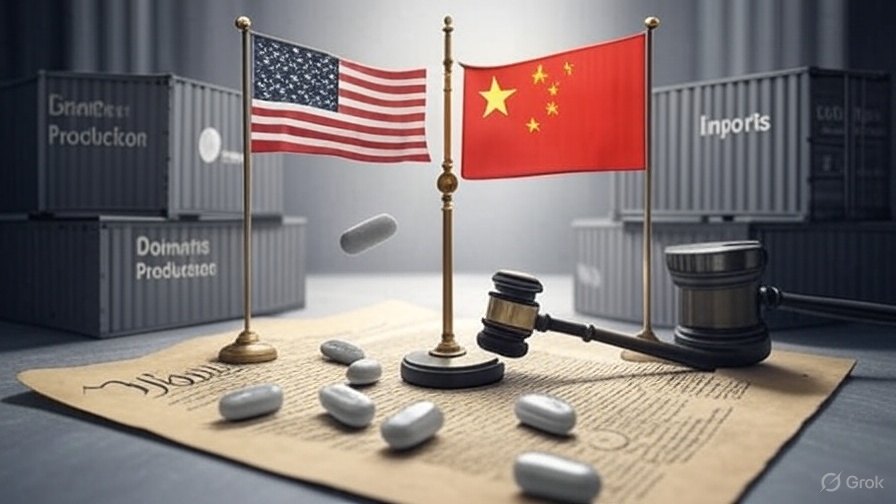
On May 12, 2025, President Donald J. Trump signed an Executive Order titled “Modifying Reciprocal Tariff Rates to Reflect Discussions with the People’s Republic of China,” invoking his authority under the Constitution, the International Emergency Economic Powers Act (IEEPA), the National Emergencies Act, the Trade Act of 1974, and other statutes. The order modifies tariffs imposed on Chinese goods, suspending 24 percentage points of the additional ad valorem duties set by prior orders for 90 days and retaining a 10% duty rate, effective May 14, 2025. It aims to address trade imbalances and national security concerns stemming from large U.S. goods trade deficits, as declared in Executive Order 14257. The order directs the Secretaries of Commerce, Homeland Security, and the U.S. Trade Representative, among others, to implement changes to the Harmonized Tariff Schedule of the United States (HTSUS). This action reflects ongoing U.S.-China trade negotiations and responds to China’s steps toward addressing non-reciprocal trade practices.
Key Questions for Citizens
- Constitutional Implications: Does the use of IEEPA to modify tariffs align with the separation of powers, given Congress’s authority over trade policy?
- Historical Precedents: How does this order compare to past executive actions on trade, such as those under Presidents Nixon or Reagan, in addressing trade deficits?
- Societal Impacts: What are the potential effects on American consumers and businesses, particularly in industries reliant on Chinese imports?
- Relationship to Existing Laws: How does this order interact with existing trade agreements like the USMCA or WTO rules, and could it trigger legal challenges?
- Long-Term Consequences: What might be the broader implications for U.S.-China relations and global trade dynamics if tariff suspensions become a recurring negotiation tool?
Analytical Framework
Language Analysis
The Executive Order employs precise, legalistic language to assert presidential authority and frame the action as a response to a “national emergency” declared in Executive Order 14257. Terms like “reciprocal,” “non-reciprocal trade arrangements,” and “national security” are central, reinforcing a narrative of economic fairness and sovereignty. The phrase “significant step by the PRC” suggests diplomatic progress, yet its vagueness leaves room for interpretation. Normative language, such as “necessary and appropriate,” presupposes that tariff adjustments are the optimal solution to trade imbalances, potentially sidelining alternative approaches like multilateral negotiations. The order’s focus on “American workers” and “domestic production” aligns with populist rhetoric, emphasizing national interest over global cooperation. This framing may resonate with domestic audiences but risks alienating trading partners by implying adversarial intent.
Evidence Assessment
The order claims that large U.S. goods trade deficits, reaching $1.2 trillion in 2024, threaten national security and economic stability by undermining manufacturing and supply chains. While trade deficit data aligns with public records, the causal link to national security is less substantiated. Economic research, such as from the Brookings Institution, suggests trade deficits reflect consumption patterns and currency strength more than unfair trade practices. The order lacks specific evidence tying China’s trade policies directly to these deficits, relying instead on broad assertions. Expert consensus, including from the Peterson Institute for International Economics, indicates that tariffs often raise consumer prices and disrupt supply chains, potentially offsetting benefits to domestic industries. The temporary 90-day suspension and retention of a 10% tariff lack clear metrics for evaluating success, raising questions about the order’s empirical foundation.
Legal and Policy Context
The order builds on Executive Order 14257, which declared a national emergency due to trade deficits, and subsequent orders (14259 and 14266) that escalated tariffs in response to Chinese retaliation. It invokes IEEPA, granting broad presidential authority to regulate commerce during emergencies, though its use for trade policy has faced criticism for bypassing congressional oversight. The order aligns with the Trade Act of 1974, allowing tariff modifications, but its interaction with WTO rules, which require non-discriminatory treatment, could invite disputes. Implementation involves multiple agencies, including Commerce, Homeland Security, and the U.S. Trade Representative, which may face challenges in coordinating HTSUS updates and ensuring compliance. State and local governments are unaffected directly, but businesses reliant on imports may face increased costs, potentially influencing local economies. The order’s retroactive application to May 14, 2025, could complicate enforcement and refund processes for affected goods.
“Effective with respect to goods entered for consumption, or withdrawn from warehouse for consumption, on or after 12:01 a.m. eastern daylight time on May 14, 2025, all articles imported into the customs territory of the United States from the PRC… shall be… subject to an additional ad valorem rate of duty of 10 percent…”
Stakeholder Impact Analysis
Directly Affected Groups: Importers, manufacturers, and retailers reliant on Chinese goods face immediate cost adjustments due to the 10% tariff. Consumers may see price increases for electronics, clothing, and other imports. Chinese exporters, including those in Hong Kong and Macau, are impacted by sustained tariffs, though the suspension of higher duties offers temporary relief. Indirectly Affected Groups: Domestic industries, like manufacturing, may benefit from reduced competition, but supply chain disruptions could harm sectors like technology. Unintended Consequences: Small businesses with thin margins may struggle with higher costs, while larger firms might absorb them, potentially exacerbating market concentration. The 90-day suspension may create uncertainty, deterring long-term investment. Distribution of Benefits and Burdens: Benefits skew toward domestic producers, while burdens fall heavily on consumers and import-dependent businesses. Rural communities, reliant on affordable goods, may face disproportionate impacts. The order’s focus on fentanyl precursors suggests a dual aim of addressing trade and public health, though its effectiveness remains unclear.
Conclusion
This Executive Order reflects a strategic pivot in U.S.-China trade policy, temporarily easing tariffs to foster negotiations while maintaining a baseline duty to protect domestic interests. The suspension of higher tariffs signals diplomatic progress but risks creating market uncertainty. Its reliance on IEEPA raises questions about executive overreach, and the lack of robust evidence linking trade deficits to national security weakens its justification. The order’s impact on consumers, businesses, and global trade relations warrants scrutiny, particularly regarding potential price increases and WTO compliance. Further research is needed on the long-term effects of iterative tariff adjustments and their alignment with broader trade agreements. Public discussion should focus on balancing economic protectionism with global cooperation and ensuring transparency in trade policy decisions.
Claude created Prompt used with Grok
Image by Grok
 AI American Fork